

Since Covid, the ‘high street’ has migrated to social media as brands were forced to build an online presence while shoppers were taking to staying home and adhering to social distancing rules globally. With the rise of e-commerce, even the most influential high street brands have had to keep up with the competition and invest heavily in their social media strategy. This has led to fashion not only being showcased in feeds anymore, but it is also transacted through social media.
The numbers tell a compelling story of this digital evolution. Social commerce has transitioned from a ‘trend to watch’ to a global powerhouse, with platforms like TikTok Shop projected to drive billions in direct revenue this year. For the modern consumer, the friction between discovery and delivery has vanished, and a viral 15-second Reel can now be one of the most potent conversion tools for your business. Social commerce is just one part of the continuously developing new landscape of modern marketing. Social search is another phenomenon that is becoming more and more spoken about in 2026, which makes the customer journey the most complex it has ever been, and why it is key for brands to be present across every new and evolving customer touch point and not get lost in the ‘messy middle’ of the marketing mix.
For fashion brands looking to dominate in 2026, the strategy must go deeper than simply posting outfits on their Instagram. Success in the current landscape requires navigating fast trend cycles and building genuine communities. Very importantly, it demands a synergy between a range of digital channels, for example, honing into the power of organic storytelling and underpinning it by the science of paid amplification. At Embryo, we see this as a data-driven approach that blends with a creative flair to turn casual scrolls into purchases.
The current fashion landscape
The fashion industry is no longer governed by the traditional seasonal calendar. We have entered an era where trends are born, peak, and vanish within the span of a 48-hour TikTok cycle.
The rise of ultra-fast fashion giants like Shein and Temu has fundamentally broken the seasonal model. While traditional fast fashion retailers might launch around 10,000 new items a year, ultra-fast platforms are using AI-driven supply chains to release over 6,000 new products per day. This strategy has created a relentless psychological pull for always needing a new outfit, whether it be for an occasion, a season, or a viral trend, which has turned clothing into a disposable commodity.
In response, premium and luxury brands are pivoting towards slow fashion narratives. Rather than competing on speed of production, they are competing on durability. We are seeing a surge in marketing that highlights craftsmanship, repair services, and circularity. For these brands, social media isn’t a place to push volume, it is a place to prove value.
Example from Belstaff, who is an English legacy brand using their heritage as an USP:
“Goodyear welted, hand crafted and built to last. Introducing the Campbell, Copeland and Munro – classic boots from the new AW25 collection, each named after streets in our home town of Stoke-on-Trent.
Learn more about the craft behind the collection at the link in bio.

Source: https://www.instagram.com/p/DN3KSjb4kFf/?hl=en&img_index=7
Platform-Specific Strategies
In 2026, a one-size-fits-all content strategy is the fastest way to drain your budget. Each platform now serves a distinct purpose in the fashion buyer’s journey, and the best-performing brands are usually found across most or all of these.
TikTok
TikTok has long moved beyond ‘viral dances’ to become the ultimate sales engine for trend-led fashion.
The focus here should be on educating through entertainment, as this is where the unpolished, authentic content thrives. TikTok users tend to reject high-production and react better to Get Ready With Me videos, styling hacks, and product reviews.
From a paid social perspective, brands should leverage the TikTok Shop integrations where possible. In 2026, TikTok shoppable videos are seeing conversion rates of 2-8%, significantly higher than traditional e-commerce benchmarks. Spark Ads should also be utilised to amplify organic creator videos rather than running brand-owned creative, as it feels more native and builds immediate trust.
Instagram remains the home of visual aspiration, where content looks more polished, but the focus has now predominantly shifted from static posts to Reels. If TikTok is the ‘behind the scenes’, then Instagram is the ‘front row’. For your content to fit on the platform, use aesthetic Reels to showcase the lifestyle and ‘vibe’ of your collection. It’s about building a world that the consumer wants to inhabit.
Instagram Reels are now driving 50% of all time spent on the platform. For premium fashion brands, Reels Ads often deliver a 1.3x higher conversion rate than TikTok, as the audience is slightly older and has higher disposable income. Focus on saveable content – styling carousels or ‘3 ways to wear a trench coat’ – to stay in the user’s ‘saved folder’ (the digital equivalent of a wishlist), this is also a guaranteed strategy to boost your organic engagement and reach.
Pinterest tends to often be overlooked in the world of social media, but this is where consumers spend most of their time planning and where most ‘considered’ purchases begin. People go to the platform to plan anything. They search for ‘spring wedding guest outfits’ or ‘minimalist capsule wardrobe’ months before they buy.
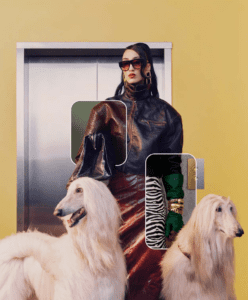
Trends on Pinterest last 2x longer than on other platforms. Pinterest has a unique tool called a Trends Tool to predict what will be popular 90 days out, which can be used to seed your ‘shopping pins’ in advance. When a user saves your Pin to a board, their likelihood of purchase increases by 70%. Furthermore, each year, Pinterest launches their trademarked Pinterest Predicts, which includes the biggest trends to look out for in the following year. For 2026, these include Brooched, Glamoratti and Khaki Coded as fashion-specific trends. Brands can tap into these and align themselves with what searches are predicted to trend on the platform that year.
Source: https://business.pinterest.com/en-gb/pinterest-predicts/2026/glamoratti/
Snapchat
Snapchat has carved a niche in AR (Augmented Reality) that is solving fashion’s biggest problem: returns. AR lenses can be used for virtual try-ons, and high-end brands like Gucci and Prada are using them to let users see how a bag or pair of sneakers looks on them in real-time.
AR lenses aren’t just for engagement, though; they drive action. Reports show that Snap AR lenses achieve an 8.5x higher swipe-to-purchase rate than standard video ads. It turns a passive view into an active trial.
2026 Fashion Trends
In 2026, the ‘polished’ fashion content is no longer the gold standard, especially in paid social. As consumers become increasingly immune to traditional marketing, brands are leaning into other methods to regain trust.
The rise of UGC
The era of mega-influencers with millions of followers has evolved into UGC made by everyday, smaller creators. It is no longer about paying a celebrity to post a flat-lay. Instead, brands are treating creators as an extension of their creative departments. These are micro-creators who provide a human reality – showing how a fabric moves in natural light or how a ‘capsule wardrobe’ actually functions in a 9-to-5 life.
In 2026, UGC assets consistently outperform brand-first creative in paid media. At Embryo, we recommend Partner Ads, where we run paid spend behind a creator’s organic handle. This preserves the authentic ‘recommendation’ feel while allowing us to scale the reach to a targeted audience.
Sustainability as a USP
Sustainability is no longer a buzzword; it’s a regulatory and social mandate. High-growth brands like Ganni are using social media to provide transparency of their production process. This includes the use of Digital Product Passports (DPPs).
Transparency in marketing is the ultimate trust builder. Ads that highlight a brand’s circularity – such as resale platforms or repair services – see a significantly higher engagement rate among Gen Z, who are documented as being 84% more likely to pay a premium for ethical products.
Live Shopping
Global livestream sales are projected to exceed $1 trillion in 2026. Fashion is the number 1 category for live commerce. ‘Fit checks,’ real-time styling demos, and limited-edition live drops create an intense sense of FOMO (Fear Of Missing Out). TikTok Shop’s growth is staggering, with its GMV projected to reach $112 billion this year. Live sessions allow brands to answer ‘how does this fit?’ in real-time, reducing return rates by up to 40%.
Case Studies
Jacquemus
Jacquemus has become the gold standard for thumb-stopping creative. They pioneered the use of CGI (Computer Generated Imagery) to blend the digital and physical worlds. Content such as the giant ‘Le Chiquito’ bags driving through the streets of Paris like buses is designed to be shared.
You don’t always need a ‘Shop Now’ button to drive sales. Jacquemus uses social to build a high-concept dream world that generates massive earned media, which in turn fuels their paid social retargeting pools with high-intent audiences.

Source: https://www.instagram.com/jacquemus/
Gymshark
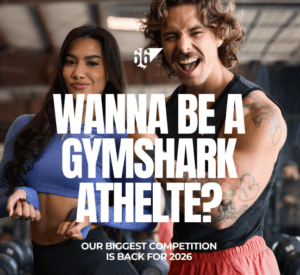
Gymshark’s success is a masterclass in the ‘Creator Economy.’ Rather than relying on seasonal collections, they rely on their ‘Athletes.’ They have moved beyond the standard influencer post to a community model. They also use TikTok and Instagram to host real-time design sessions, where fans vote on colourways and features for upcoming drops.
By involving the community in the product lifecycle, Gymshark ensures that when the paid social push begins, there is already an army of advocates ready to convert. They aren’t finding an audience; they are activating one.
Source: https://uk.gymshark.com/blog/article/how-to-become-a-gymshark-athlete
ASOS
Asos remains the leader in multi-platform integration. By 2026, they have perfectly bridged the gap between TikTok Shop and their own app. Their strategy revolves around high velocity UGC – using hundreds of micro-creators to showcase Asos Design hauls. The brand uses broad-reach TikTok Spark Ads for discovery and then follows the user to Instagram with Dynamic Product ads that show the exact items the user reviewed. This cross-platform use of data ensures they capture the sale regardless of where the user is.
The future-proof fashion strategy
As we navigate the complexities of 2026, it is clear that the ‘new runway’ is a digital-first, community-driven and data-backed ecosystem. We have moved far beyond the era of simply aesthetic grids and influencer flat-lays. Today, a successful social media strategy for a fashion brand is a sophisticated balancing act – merging the raw, unpolished energy of a TikTok GRWM with the high-precision targeting of AI-driven paid social campaigns.
The fashion industry has always been a mirror of cultural shifts, and the move toward social commerce is perhaps the most significant shift since the birth of e-commerce itself. Brands that continue to treat social media as a secondary channel will find themselves increasingly invisible. In a world where the consumer’s attention is the most valuable currency, the winning brands are those that prioritise frictionless experiences. This means moving the point of purchase directly to where the point of inspiration occurs. If a consumer falls in love with a jacket on their TikTok FYP (For You Page), they should be able to own it in three taps or fewer.
However, as we embrace the rise of AI-stylists and virtual try-ons, we must not lose sight of the human element that makes fashion so compelling. Fashion is, at its core, an act of self-expression and identity. While AI can optimise our ROAS and predict our next bestseller, it cannot replace the emotional resonance of a brand that stands for something. The brands that thrive are those that use technology to enhance their human story, not replace it.
The strategy for 2026 is clear: diversification is your greatest defence. Relying on a single platform or a single content format is a high-risk strategy. The goal is to build a full funnel ecosystem where discovery happens on TikTok and Pinterest, consideration is nurtured through Instagram Reels and AR try-ons, and conversion is sealed through frictionless retargeting and social checkout. The digital high street is more crowded than ever, but for those who can master the blend of organic storytelling and paid precision, the opportunity for growth has never been greater.