

Standing out today, whether online or in a room, requires more than just industry expertise. It requires authenticity.
As part of our Ivy Manchester event series, we recently hosted a roundtable that brought together a brilliant group of women in property to discuss what it means to be a thought leader now. We explored who inspires us, what holds us back, and how to build a genuine personal brand when the feeds feel noisy and your to-do list is already fit to burst.
Here are the core themes, key takeaways and actionable next steps from that discussion.
Authenticity and finding your inspiration.
We kicked off the morning by naming the thought leaders who inspire us – ranging from global icons to local ones, as well as family, colleagues and friends.
What was interesting was that inspiration rarely came from perfectly curated corporate figures. Instead, the room highlighted names like Michelle Obama, Charlize Theron and Caitlin Moran. There were powerful women within the industry listed too, like Louise Emmott from Women in Property and Alex Notay, the new CEO of The Housing Forum.
Key insights:
- Honesty over polish – The most admired leaders are those who are honest about their struggles, describe the behind-the-scenes journey and aren’t afraid to voice their opinions.
- Humour and approachability – People like Caitlin Moran tackle heavy topics (like feminism and the manosphere) with a level of humour that cuts through the frustration and makes heavy subjects highly relatable.
- Authenticity is your superpower – A point was made about leaders who talk openly about what they care about, whether that’s neurodivergence (Leanne Marshall), leadership and female empowerment (Emma Grede), or family life. Seeing that kind of representation, someone you can genuinely relate to, makes a profound impact and encourages others to bring their whole selves to the table.
Takeaway: This section of the event really emphasised that trying to become a thought leader isn’t about changing who you are. It’s about taking what you already know and what you’re genuinely passionate about, and translating that authentically into your online presence, your networking events, and your everyday business conversations.
Escaping the echo chamber.

Breakfast arrived, and we had a look at what currently dominates industry feeds and what’s lacking.
The general consensus was that we’re drowning in dry facts or pieces of information and missing the human element – the unique opinion that brings something new to the conversation and leaves the reader with something actionable they can take away with them.
Key insights:
- Storytelling is often the missing piece – We spoke about the deluge of “delighted to announce” posts, and there was a real feeling around the table that too many people only share the final result rather than the story behind the work. Why is the project exciting? What was your specific role? Why does it matter?
- Bridging the gap – There’s a huge opportunity to be the voice that brings different sides of an industry together. For example, one attendee would like to see a thought leader in the property industry connect the dots between commercial awareness and design quality.
- The power of reports and long-form – Publishing your own reports based on proprietary data and original insight can really make an organisation stand out from the crowd. It’s an absolute goldmine for thought leadership – one piece like this can disseminate down into an entire multi-channel marketing campaign. Of course, this is easier said than done and requires an investment of time and resources, but it can also be made easier by partnering on joint reports with other brands.
Takeaway: Be brave and stop sitting on the fence. As one attendee said, “what’s the point” of posting if you aren’t actually sharing a distinct perspective? Escaping the echo chamber means having the courage to take a stance on industry updates or reports, rather than just passively sharing them.
Overcoming roadblocks and challenges.
Even when you have a great story to tell, actually hitting “post” is another thing entirely.
We discussed the challenges that hold us back – from time and team capacity, to the natural hesitation around striking the right tone, to the practicalities of getting ideas approved in a corporate structure.
Key insights:
- Online self-censorship – Posting on platforms like LinkedIn can sometimes feel overly permanent, as if everything is captured in “black and white”. It’s completely normal to hesitate before posting, knowing that public forums occasionally lack the nuance needed for complex industry topics.
- The safety of live events – For this reason, many professionals prefer the more dynamic environment of roundtables or conferences. Live events naturally lend themselves to nuance and fluid dialogue. They offer the space to explain your points fully, answer questions in real time, and ensure your message lands exactly as intended.
- Aligning with internal processes – Sharing your perspective through official company channels often means navigating approval workflows. The challenge lies in collaborating with your team to get ideas signed off without unintentionally diluting the unique voice and point of view that you bring to the table.
Takeaway: If you’re hesitant to post a strong opinion, soften your approach by posing it as a question. Try starting a conversation with: “We had a great discussion on X today. I’ve always leaned towards Y, but I appreciate that others think differently. What are your thoughts?”
And if you want your organisation to back your thought leadership efforts, create a one-pager outlining your objectives, your overarching narrative and your core content pillars. Get that approved by the company. Once the guardrails are agreed upon, you have the freedom to post within them without necessarily getting approval each time.
How to build a sustainable content engine.
One of the biggest barriers to consistency is the misconception that thought leadership requires you to constantly reinvent the wheel or publish a perfect essay every time you log on.
Building a sustainable content engine isn’t about working harder. It’s about creating a system that turns your everyday insights into engaging content without draining your time or energy.
Key insights:
- Take the “one-to-many” approach – One attendee recalled something she had heard once: “Good marketing is saying one thing a hundred times, not a hundred things once.” When applied to thought leadership, this could mean taking one great project or insight and splitting it into multiple posts over several weeks (such as an announcement, a deep dive into the ‘why’, and a lesson learned).
- Write how you speak – Industry jargon often creates a barrier between you and your audience, so keep your language simple and accessible. When drafting a post or article, imagine how you would explain the topic to a friend or a peer. This conversational tone naturally injects authenticity into your writing and makes your expertise much more approachable.
- Use AI as an assistant not an author – AI is great for transcribing notes or structuring a rambly voice note, but you should always form your opinion first before getting AI to refine it. Relying on AI to generate ideas strips away your ownership, and retrofitting its output into your voice can make the final product sound awkward or weak.
- Mix in the personal – Not every post has to be a piece of heavy-hitting thought leadership. You can often work an opinion into any post. If you’re posting about being at an event, for instance, share something you found interesting about a talk or the setup. There’s also value in the purely personal stuff – a post on a hobby could end up being a great icebreaker at a networking event.
Takeaway: Stop treating thought leadership as an “extra” task on your to-do list. Take a step back and review what your business is already doing – whether that’s PR, events, or internal conversations you’re having – and extract the insights from there. When you’re lacking inspiration, you can get maximum mileage out of these existing things rather than starting with a blank page.
Your next steps: How to start showing up consistently.
With these tips in mind, the next step is turning your good intentions into lasting habits. Here are some ways to start contributing to discussions more consistently:
- Make it part of your job description – Have a conversation at work to officially carve out time in your calendar for building your personal brand, promoting/posting about events, etc.
- Be proactive – Don’t wait to be invited. Ask to speak at events or tap into organisations that help place and train panellists and moderators (Diversity Talks Real Estate was mentioned as a great one in the property sector – search for similar in your particular niche).
- Embrace a “done over perfect” mindset – It’s okay to overthink less and do more. Thought leadership isn’t about delivering one flawless keynote or publishing the perfect post. It’s about seizing multiple opportunities to share your voice. This volume builds momentum, confidence and visibility over time. Don’t be afraid to experiment and learn what resonates.
- Find a champion – Find a peer who can help you talk through challenges, review your ideas and support you in safe environments – someone who is active as a thought leader. And then be that person for someone else.
Download your thought leadership playbook.
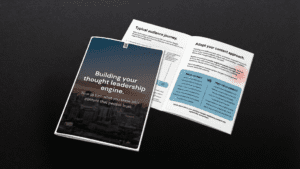
And there you have it – a bit of a starter for ten for finding your authentic voice and developing a personal brand. If you’re ready to take these learnings and build more structure and impact into your thought leadership strategy, we have just what you need.
Our guide shows you how to turn your expertise – one of your most valuable assets – into a content engine that positions you as a thought leader and moves prospects through the buying process. From auditing your current approach to extracting your knowledge and prioritising consistency, it covers every step along the way.