
If AI visibility has become part of your SEO strategy, writing in a way for LLMs (Large Language Models) to retrieve and cite content is an essential skill to learn.
Whether someone searches in Google, asks ChatGPT, uses Perplexity or browses AI Overviews, the brands that appear always create human-first, trustworthy content that genuinely helps people make decisions.
Despite what you may have heard, you don’t need to start writing for robots. You need to understand how robots read a website. While we aren’t reinventing SEO content best practices, there are tips and tricks we’ve picked up that we’re sharing with you today.
Here are 10 practical content writing tips to help improve your AI visibility without abandoning everything you already know about good content.
1. Write for people first; AI naturally follows
Writing for humans is the golden rule of content, and it’s something we’ve been doing for years. Ever since Google introduced its Helpful Content guidelines, authenticity, expertise and genuinely helpful content have been rewarded in organic search. It should come as no surprise that AI search systems use many of those same signals.
AI systems are designed to provide the most useful, relevant and trustworthy information that matches a user’s query and intent. If your content genuinely helps someone solve a problem, answer a question or make a decision, you’re already creating citation-worthy content.
2. Answer complete conversations, not individual keywords
Bear in mind that AI queries are around 3x longer than a traditional Google search. End users build context and use conversational language on AI platforms. Where we would traditionally target a primary keyword for Google, we’re now creating content that also considers semantically related terms and personalised, situation-based questions.
For example:
“Best skincare” becomes “What’s the best skincare for dry, sensitive skin under £20?”
The more connected questions you answer, the stronger your topical authority becomes. Think about all the conversations people have around your speciality and build content clusters around those topics. Your job, as far as AI is concerned, is to become a subject matter expert in your field.
The more FAQs you answer, user guides you create, detail you provide about your products or services, and content gaps you fill, the better positioned your content is for AI retrieval and citation.
3. Diversify your content to build topical authority
Topical authority isn’t built by publishing one amazing blog. More than half of AI citations come from just three content formats: listicles, articles and product or service pages (52% combined). Topical authority is something you earn by covering a topic from multiple angles and answering the questions people ask during their entire research process – right until they’re ready to make a decision.
| User intent | Content types AI commonly cites |
| Informational | Articles, Listicles, How-to guides |
| Navigational / Local | Product pages, Category pages, Homepages |
| Transactional | Product pages, Listicles, Category pages |
| Commercial | Listicles, Category pages, Product & service pages |
(source: wix.com)
Always produce content with your target audience in mind, and assess what problems, desires or needs they might have, then create content types that help answer them at every stage of their journey.
4. AI needs evidence you’re an expert site-wide
LLMs do not read a single page to make a judgement; they look at the bigger picture. AI summarises your brand by connecting entities, topics, relationships and supporting evidence across multiple pages (including external sources).
Essentially, treat your site as though it’s being interviewed – what makes you fit for the role? The areas you should look to pay attention to:
- Expert authors (attribute articles to real internal experts, not just ‘admin’).
- Qualifications and industry accreditations
- Awards
- Years of experience
- Clear contact information
- Original research
- Case studies
- Client testimonials
- Blog post and updated dates
Your homepage and About Us page are among your biggest trust-building assets. They’re often the first pages users visit when researching your brand, so we recommend optimising those for conversion and AI retrieval as a priority. Research shows that 70-80% of homepage visitors are first-time visitors, so making a good first impression really does count (for both humans and bots!).
5. Make every piece of content truly original
In its new AI optimisation guidance, Google tells creators to produce ‘non-commodity content’ and ‘provide a unique point of view.’ In other words, it’s not enough to rinse and repeat competitor content; this never worked for traditional SEO either. When thousands of other websites are creating similar content, yours needs to stand out. This is where we call AI content generation into question – why would an LLM use content that it could create itself?
Weave in:
- New perspectives and expert quotes from your team, attributed to their professional profile.
- Original data to back up your claims and advice
- Experience (case studies, relevant situations you can relate back to the subject matter)
- Frameworks and methodology
- Social media post integration
- New ideas that cannot be found from similar pages
6. Chunk your content for AI retrieval
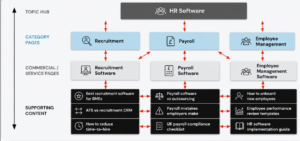
This point largely mirrors the SEO best practices you may already be drawing from. The formatting of each page: headings should act as clear, contextual labels that accurately reflect what each section covers.
Large language models don’t necessarily use an entire page when generating a response. They pull passages that best answer the user’s query. Help AI understand your content by:
- Use descriptive H2 and H3 headings for every new idea/concept
- Answer questions in FAQ format directly before expanding the answer
- Break up long paragraphs into extra sections or single lines
- Using bullet points and tables when displaying data or lists
- Include strong introductions and key takeaways
- Group related information together and cover the topic comprehensively
Every section should be sign-posted, easy to skim and engaging for people and AI to find just what they’re looking for,
7. Repurpose and distribute your best content across platforms
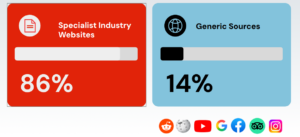
Content discovery happens in more areas than just your website. Research analysing 2,440 LLM citations found that 86% of citations came from industry-specific websites, compared to 14% from community and social applications like Reddit, Wikipedia and YouTube. While this reinforces the importance of focusing on your website, it also shows there’s room to branch into other platforms. AI will refer to communities, videos and user-generated content to validate information and gather the perspectives of real people.
Never leave a good piece of content in the archives of your blog page. Repurpose it into shorter form content in the form of social posts, FAQs, videos, PR commentary, email newsletters, podcasts, or even sales material.
Not only does this extend your content’s lifespan, but it also helps it be discovered from other platforms.
8. Don’t neglect optimising your highest converting pages
Many content marketers are quick to assume a good blog strategy is all it takes. However, over 50% of AI users use it to compare products or services and make a purchase/convert.
Remember that search systems like ChatGPT and Perplexity will compare brands against each other, meaning the user has a condensed comparison of features and benefits presented before them. Ensure your commercial pages include all your unique selling points and anything else that helps people choose you over competitors.
If your most valuable pages contain just a few lines of copy, you’re making it harder for AI to find and recommend you.
Consider including:
- Pricing (where possible)
- Delivery and returns details
- Materials, ingredients or specifications
- FAQs related to the product/service itself
- Comparisons and related products
- Reviews and testimonials
- Trust signals and accreditations
- Recent case studies
- Who the product or service is for
9. Test your content in AI search
Brands often attempt to optimise AI without testing it themselves. Running tests yourself can be the clearest indicator of who gets recommended and how AI currently portrays your brand. Run prompts that your customers are likely to ask, or speak to your sales team about the questions they’re often asked. Next, evaluate the answers it gives you.
Here’s what you should be looking for:
- Is my brand recommended?
- Which other brands appear most often?
- Is the information it’s providing accurate?
- How does it perceive our reputation?
If you don’t yet have access to an AI visibility tool, these manual checks can provide you with a great head start in forming a content strategy and identifying gaps.
10. Keep your content fresh and keep testing
AEO and GEO optimisation isn’t a quick checklist job; it’s something you should have running as part of your ‘always on’ marketing strategy. If traditional SEO taught us one important lesson, it’s that best practices, search results, user intent and technologies change all the time – search is unpredictable.
We know that AI search systems regularly look for the most up-to-date answers it can find, which proves that consistently updating outdated content matters. Similarly, the best practices we know now can also change, so your approach should be open to evolving, too.
AI content optimisation in practice: How we’ve applied these methods
It would be wrong to claim that we’ve mastered GEO – nobody truly has. But as an SEO and content marketing agency, understanding AI visibility and evaluating how our content performs in LLMs is something we’ve been concentrating on.
We’ve always designed people-first content, and we’re starting to see how this approach is paying off for our own clients. If you’d like to learn more, get in touch or read more of our AI-related articles – we’re always happy to help!